Order progress
Know how production is advancing while the order is still in motion, not only after consolidation.
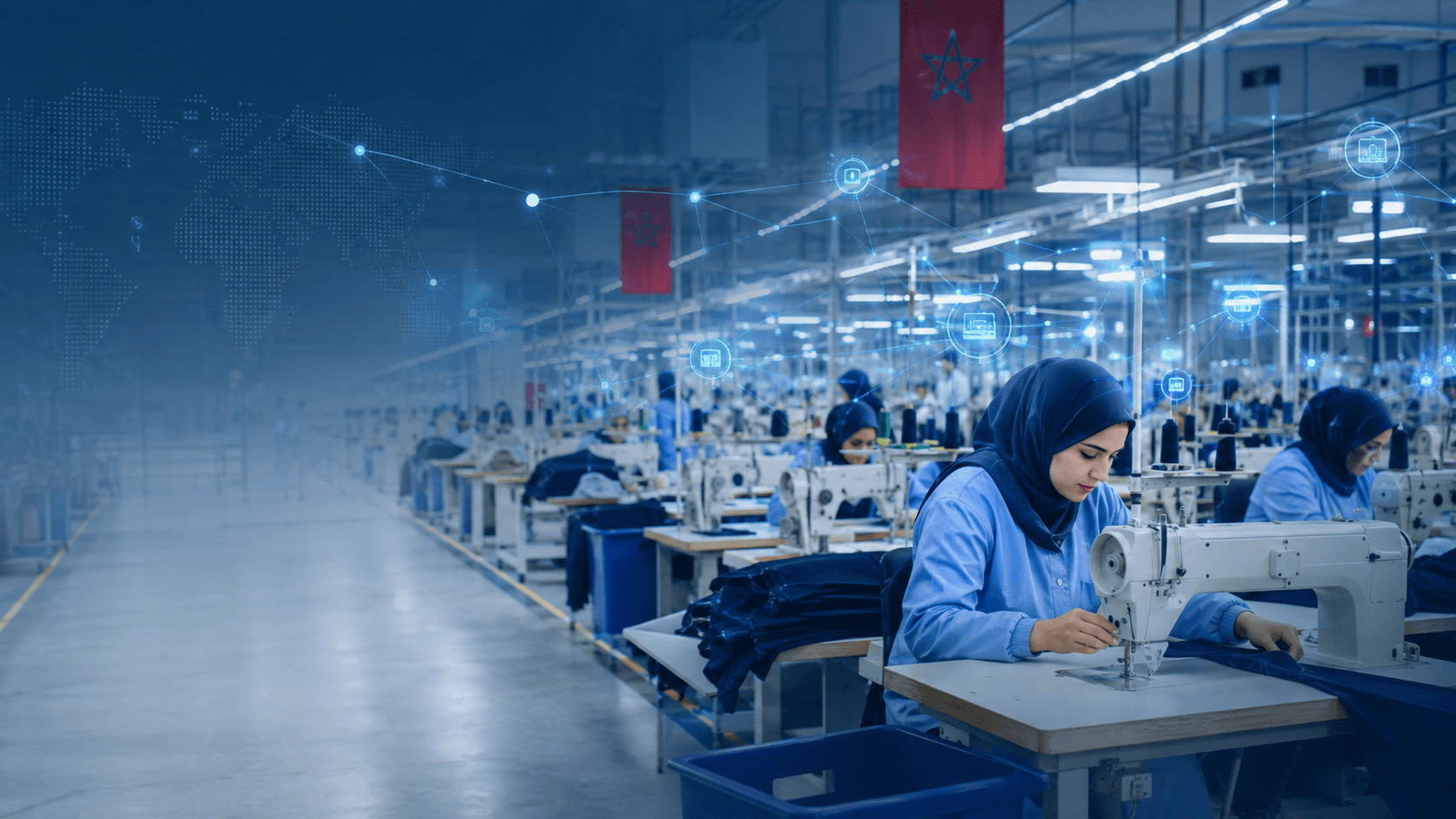
Cadence starts in textile because the problem is operationally important, the sector is strategically relevant in Morocco, and our first paid validation came from a real industrial need.
Textile production depends on synchronized movement across stages, lines, people and batches. When status information arrives late, management loses the ability to act while there is still time to influence the shift or order.
Know how production is advancing while the order is still in motion, not only after consolidation.
Understand where batches or baskets are accumulating and which production stage is slowing the flow.
Capture production milestones and operational events close to the workstation where they occur.
Create a richer operational history that can support better reporting, analytics and future traceability requirements.
Track output and progress at the level where decisions are made.
Follow batches and work-in-progress through defined production zones.
Reduce time spent searching for the current state or location of a production group.
Give production leaders one current view instead of waiting for manually consolidated updates.
Cadence grew out of a real industrial request. That first customized delivery validated the core hardware concept and the integration-first architecture. We are now standardizing the product for repeatable deployments.
Textile is the first vertical, not the ceiling. The same modular approach can later address other manufacturing environments where operators, materials and machines generate operational events that management needs to see in real time.
Tell us which production stage, WIP flow or reporting gap creates the most friction today. We can scope an early Cadence pilot around that problem.