Modular
Capture, connectivity, tracking and software are separated so deployments can evolve without redesigning everything.
Cadence is designed to capture events close to the factory floor, coordinate them through an edge/gateway layer, turn them into operational context and make that data available to the systems manufacturers already depend on.
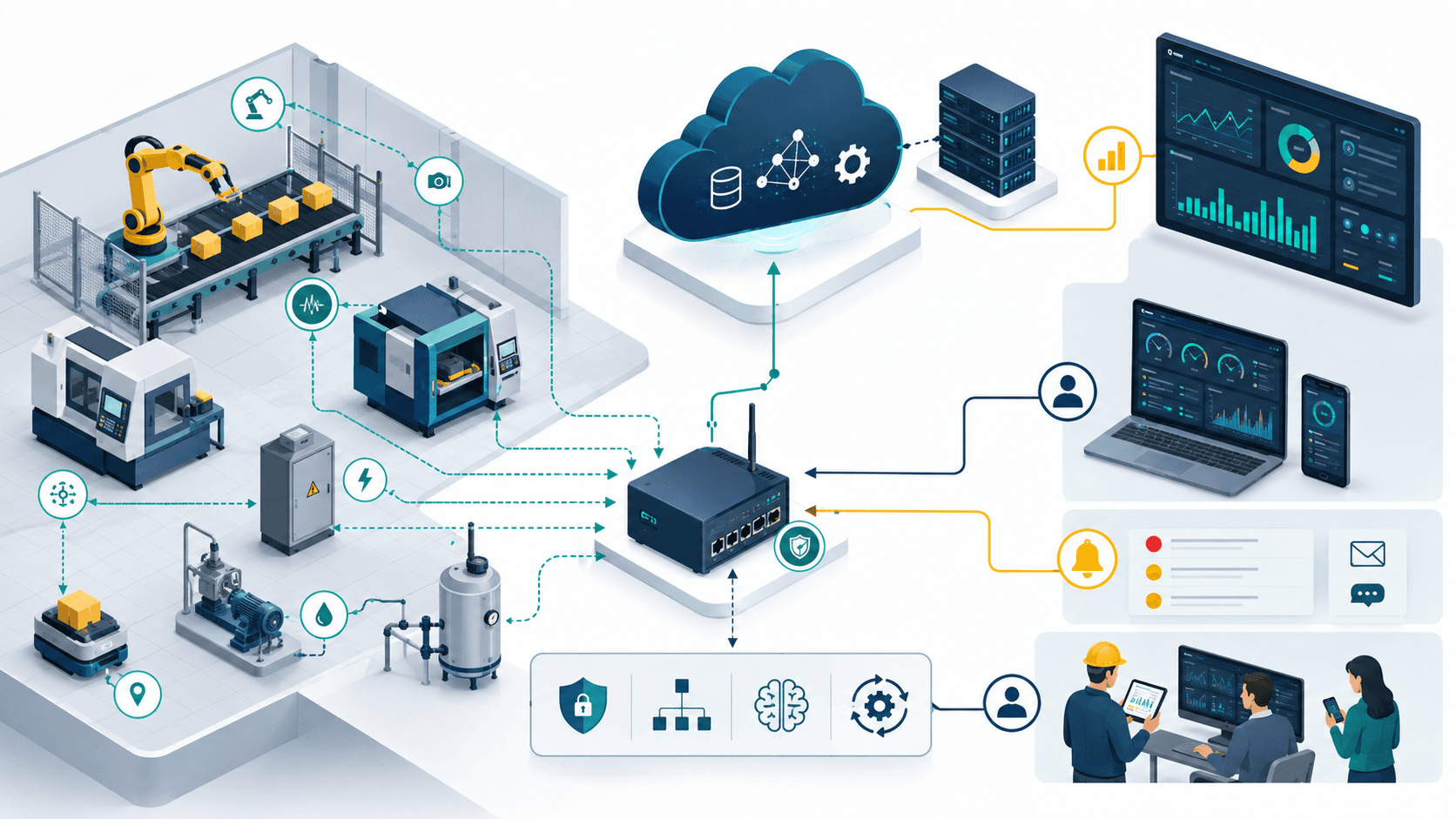
Purpose-built devices record production events or movement at the point where work happens.
Smart Hubs coordinate local device communication and synchronize the required data upward.
Operational events become current state, history, dashboards, alerts and device context.
APIs let factories connect Cadence data to ERP, MES, analytics or custom software.
Capture, connectivity, tracking and software are separated so deployments can evolve without redesigning everything.
The goal is to coexist with existing software and expose useful operational data through well-defined interfaces.
Device identity, controlled access, encrypted transport and site-level separation are part of the productization roadmap.
Local connectivity reduces the need to make every shop-floor device independently cloud-dependent.
Current state matters; so does a reliable history for understanding deviations, flow and recurring operational patterns.
We first build a trustworthy operational dataset. Prediction and optimization only become useful after the data foundation is reliable.
Cadence is intended to sit between physical operations and digital systems. In some deployments, the Cadence platform can be the main operational interface. In others, the hardware and data layer can feed a client's existing platform.
Our first paid hardware deployment was built specifically to integrate with an external client platform. That is why integration is part of the core architecture, not an afterthought.
We are speaking with manufacturers interested in early Cadence deployments and co-validating the product around real operational needs.